Assets
Assets are diagnostic files, such as CPU profiles and heap snapshots, that the N|Solid Agent captures from your processes. This page describes how to find, manage, analyze, and download assets in the N|Solid Console.
N|Solid can generate these asset types:
- CPU Profiles (
.cpuprofile) - Continuous CPU Profiles (collected continuously when continuous profiling is on)
- Heap Snapshots (
.heapsnapshot) - Heap Profiles, captured with the Track Allocations option (
.heapsnapshot) - Heap Samples (
.heapprofile)
The Assets view
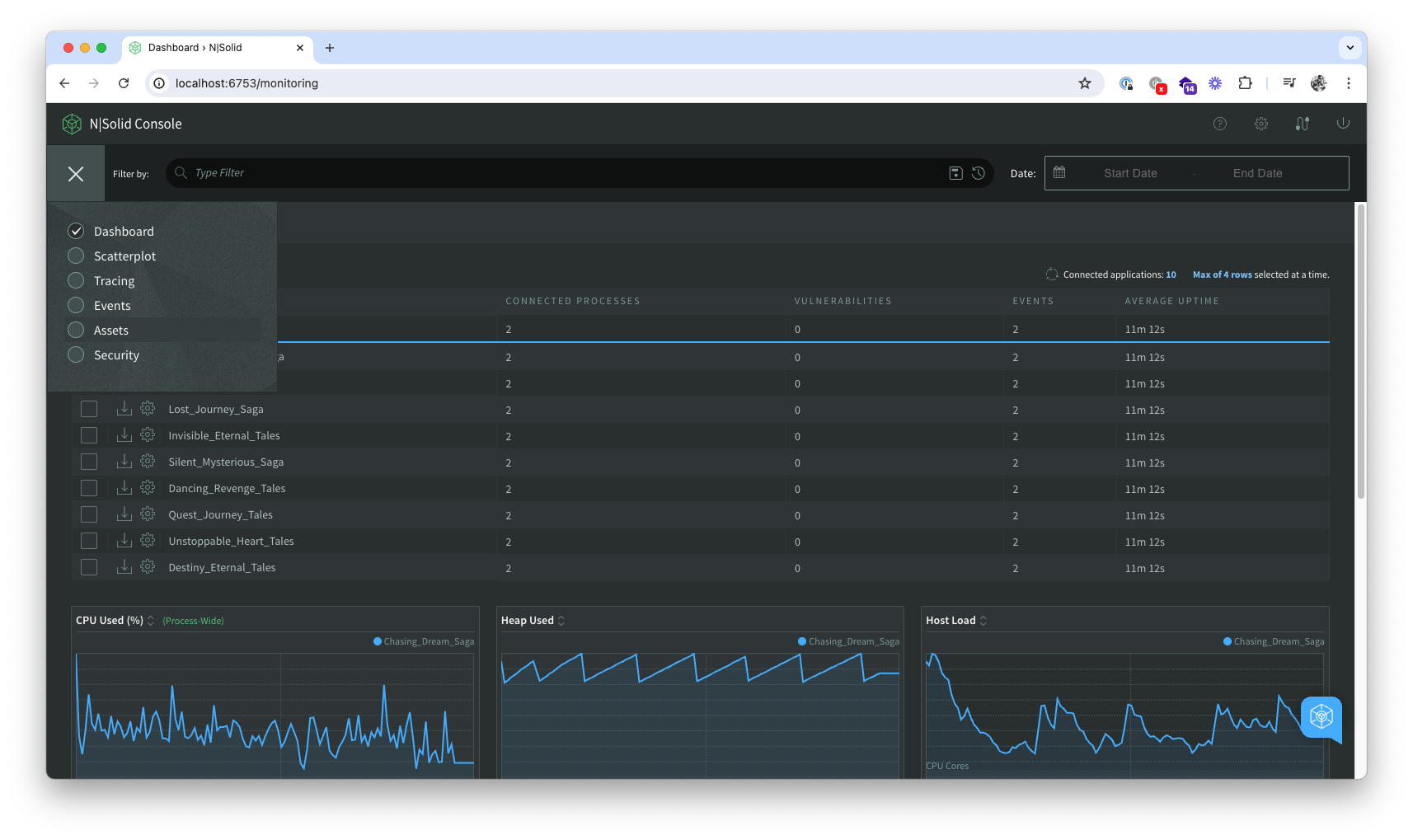
Open the navigation menu at the top left and select Assets.
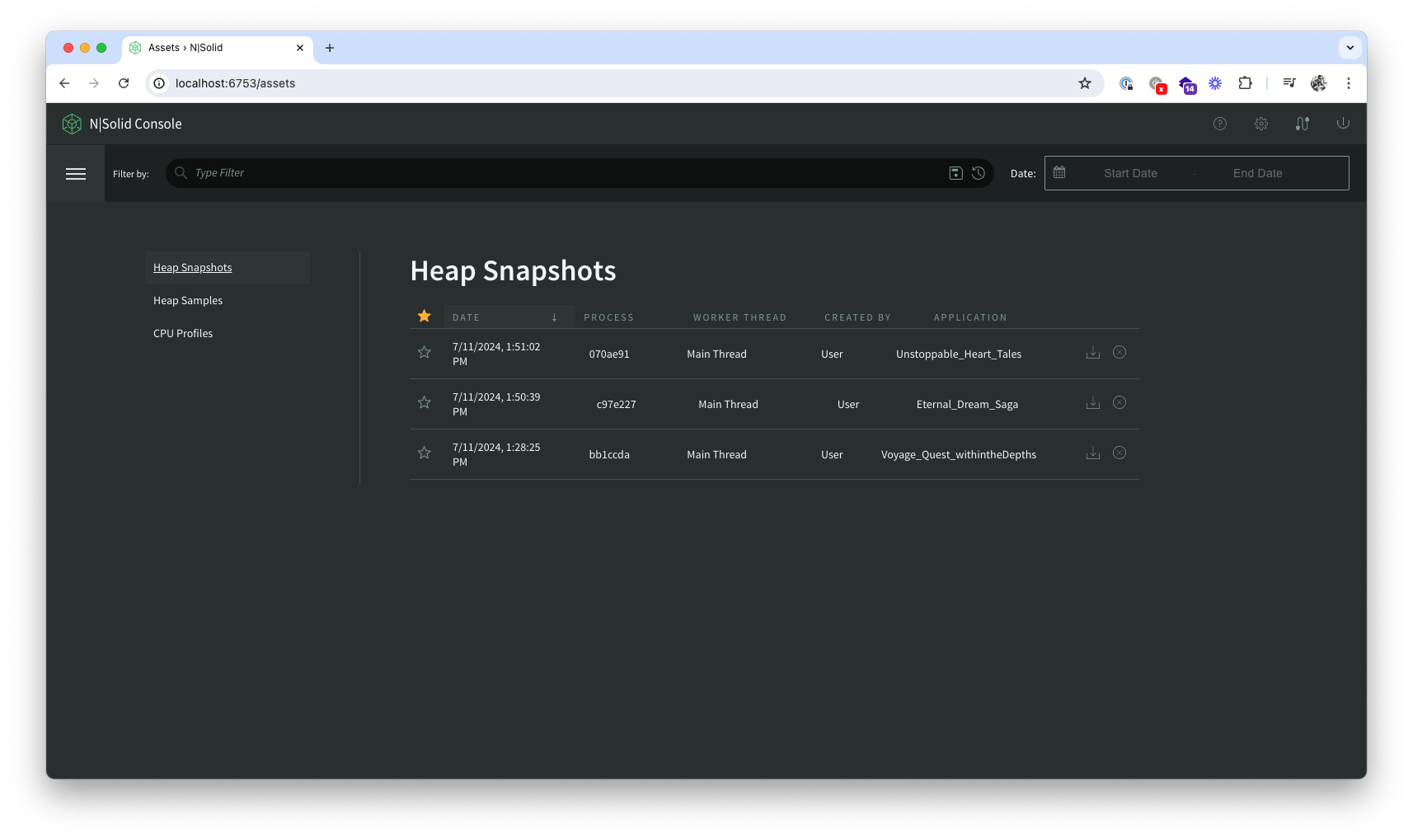
The Assets view lists every asset, whether you captured it manually from the Dashboard, through a custom filter action, or through the runtime JS API. Assets are grouped in four tabs:
- Heap Snapshots -- Heap snapshots, and heap profiles captured with Track Allocations (marked (Profile) next to the application name).
- Heap Samples -- Heap samples.
- CPU Profiles -- CPU profiles.
- Continuous CPU Profiles -- Profiles collected by continuous profiling. Shown only if your role has access to continuous profiling.
The Assets view is filtered by the global Filter Bar and Date Range.
Managing assets
Pausing asset collection
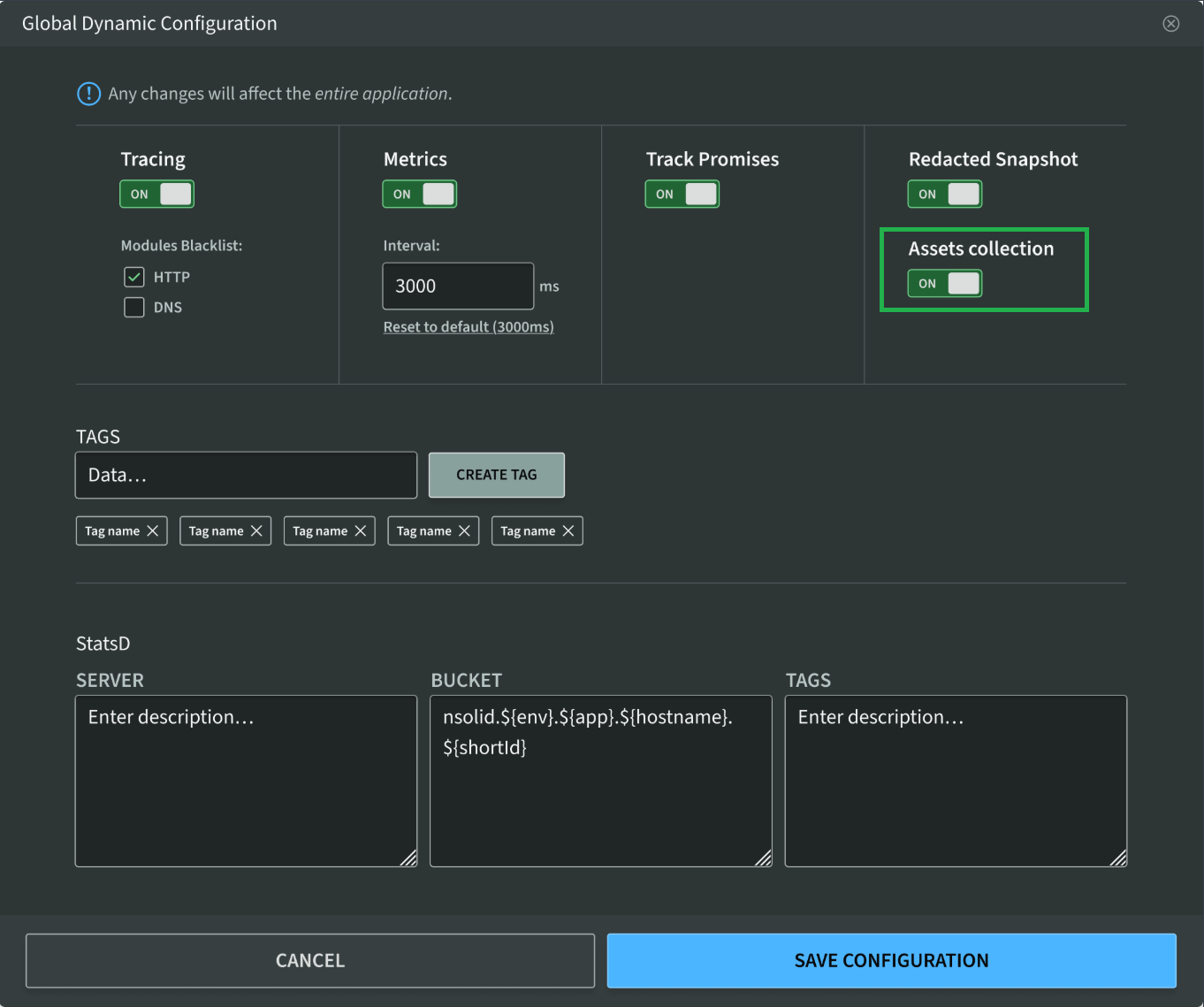
You can turn asset collection on or off for an application or a single process with the Assets collection switch in the Dashboard's Dynamic Configuration modal (gear icon). The switch appears only when the connected runtime supports it (N|Solid Runtime 6.1.0 and later).
Deleting assets
Click the X icon on an asset to delete it. Until the deletion completes, you can click Undo to restore the asset, and a banner at the top of the Console lists assets that are about to be deleted.
Starring and naming assets
Unsaved assets are deleted automatically after the retention period set under Settings > General Settings > Asset Retention (Keep Profiles and Keep Snapshots; see Settings). To keep an asset until you unsave it, click its star (save).
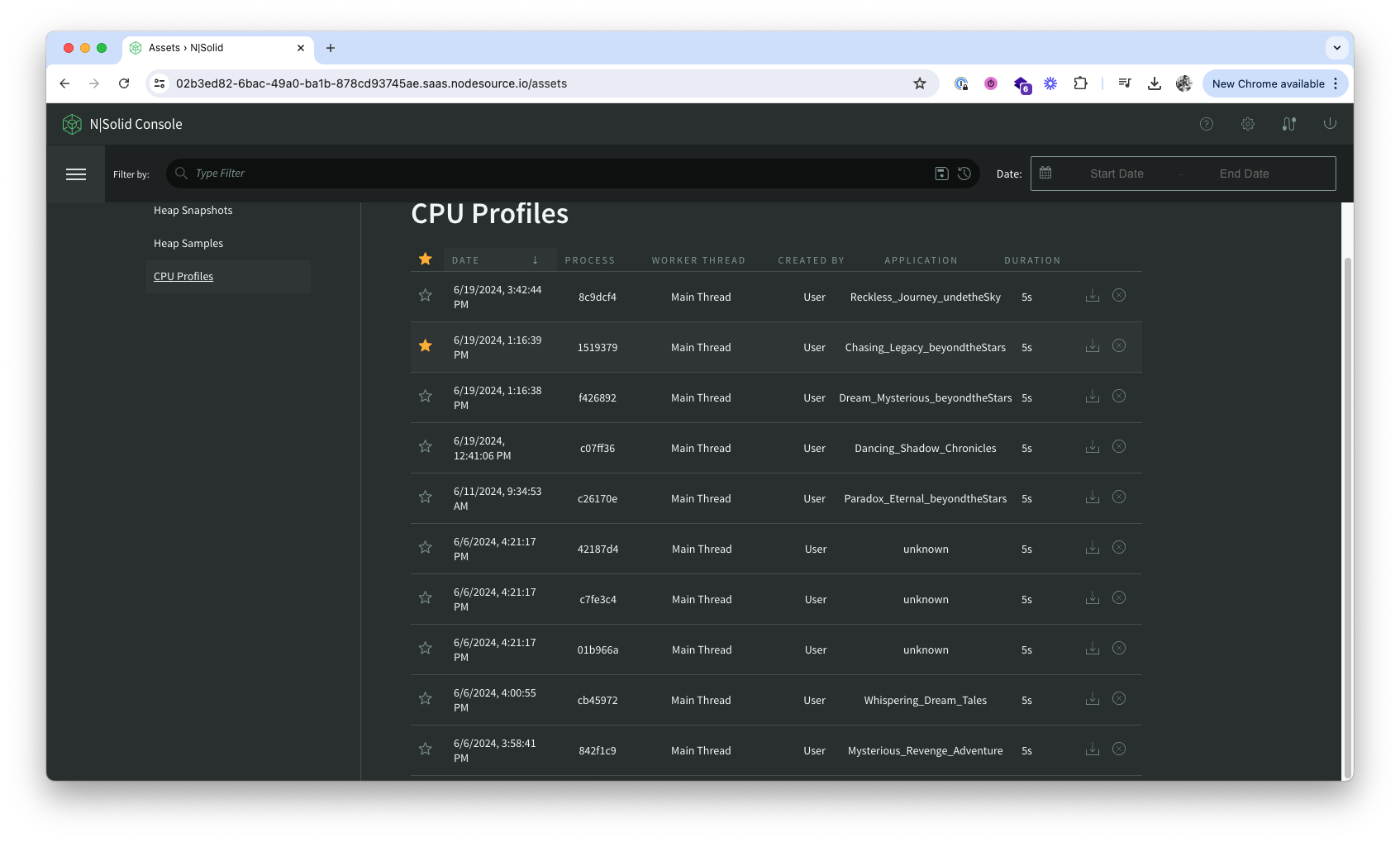
After you star a CPU profile or heap sample, you can give it a name: click the pencil icon next to the name in the asset list or the profile viewer (unnamed profiles show Not Named), type a name, and press Enter. Heap snapshots can't be renamed.
Viewing CPU profiles in the Console
In the CPU Profiles tab, click a profile to open it in the Console's profile viewer, which shows the profile as an interactive flame graph.
The header of the profile viewer has these controls:
- save -- Star or unstar the profile.
- AI Report -- Ask N|Solid Copilot to generate a diagnostic report for the profile. Requires the AI service permission for your role and the N|Solid MCP server (see Copilot prerequisites).
- Sourcemaps: Upload File / View File -- Upload a sourcemap zip for the profile, or view the one attached. See Sourcemaps.
- Download Raw Profile -- Download the
.cpuprofilefile.
You can also start an AI report from the AI icon on a row of the CPU Profiles tab. The Heap Samples tab has the same AI icon on each row. For a walkthrough of CPU profiling, see CPU profiling.
Continuous CPU profiles
When continuous profiling is on, the runtime profiles the process continuously and sends the profiles to the Console. Turn it on with the Continuous Profiling switch in the Dynamic Configuration modal, in a Configuration Set, or with the NSOLID_CONT_CPU_PROFILE runtime setting (see Configuration).
Continuous profiles are delivered only over gRPC connections (NSOLID_GRPC or NSOLID_SAAS). Continuous profiling is available only if your role has access to it.
Open a profile in the Continuous CPU Profiles tab to see a flame graph of the profile data collected during a time window. By default, the viewer shows the last hour of the stored data; use the global date range to choose a different window. The AI Report, Sourcemaps, and Download Raw Profile controls aren't available for continuous profiles.
Downloading assets
You can download any asset to analyze it with other tools, such as Chrome DevTools.
Loading heap snapshots, heap profiles, and heap samples in Chrome DevTools
In the asset list, click the download icon to download the asset.
This section covers heap assets, which are listed in the Heap Snapshots and Heap Samples tabs.
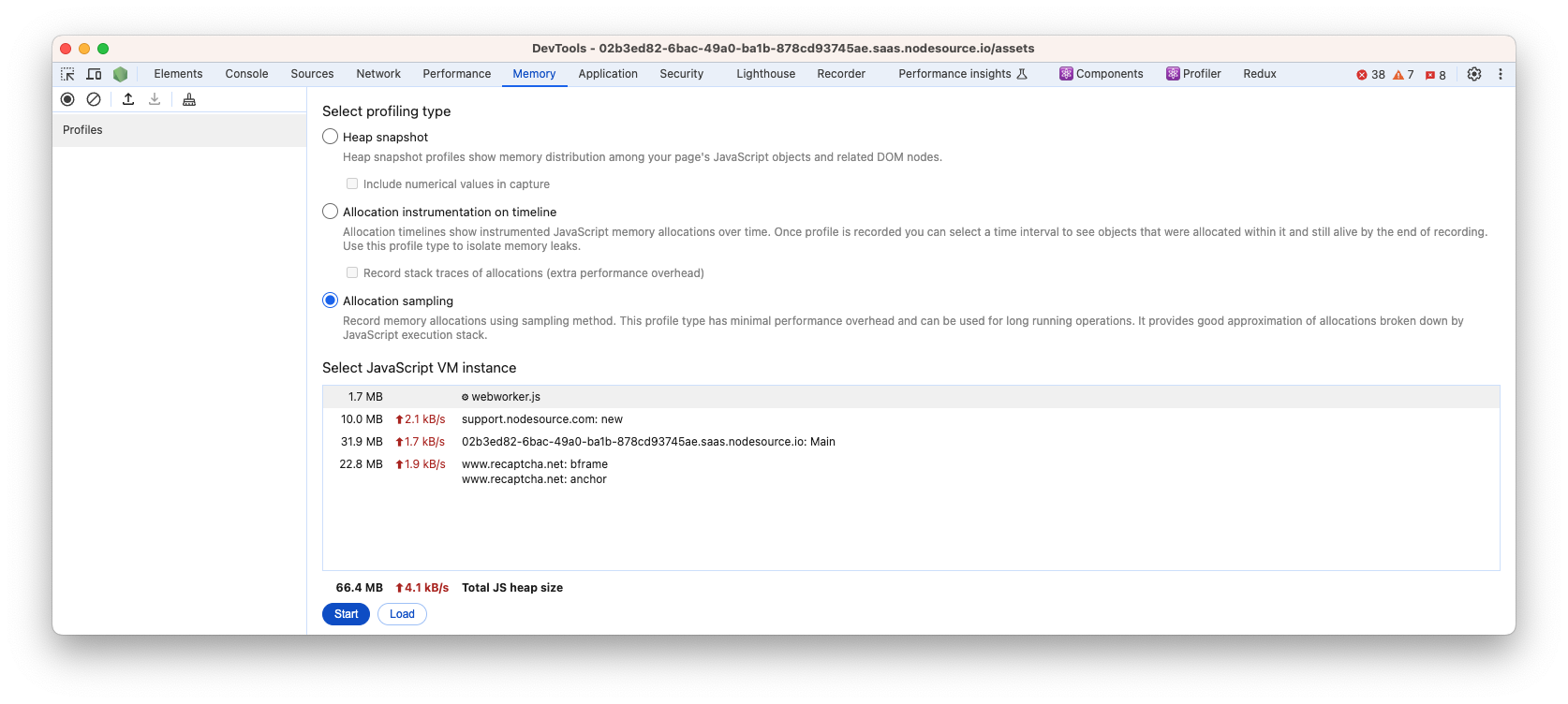
Open Chrome DevTools and select the Memory panel. Click the load icon at the top left and select the downloaded asset.
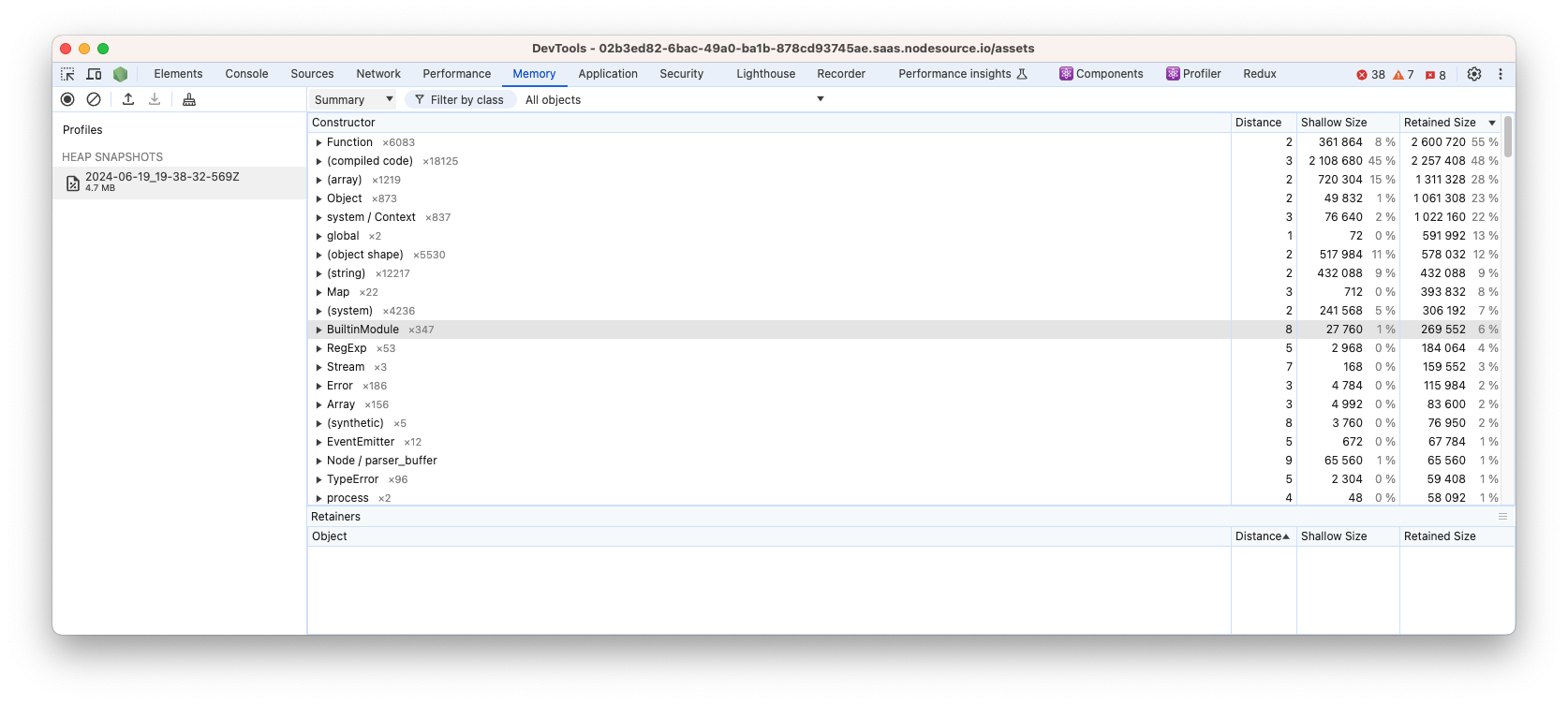
Heap snapshots and heap profiles have the same visualization in Chrome DevTools.
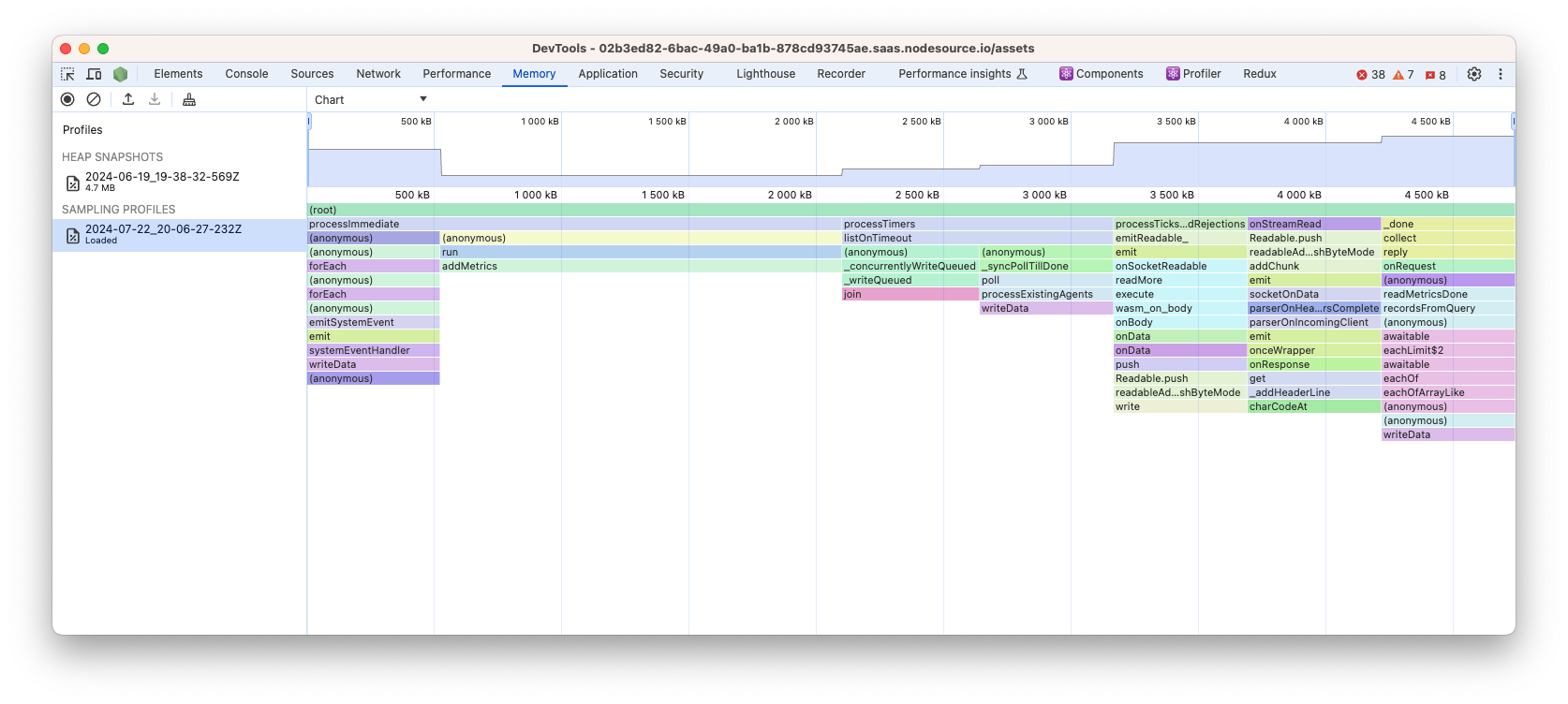
A heap sample is displayed as a flame graph of the allocation activity in your heap.
Loading CPU profiles in Chrome DevTools
Download the profile from the CPU Profiles tab with the download icon, or with Download Raw Profile in the profile viewer.
This section covers assets listed in the CPU Profiles tab.
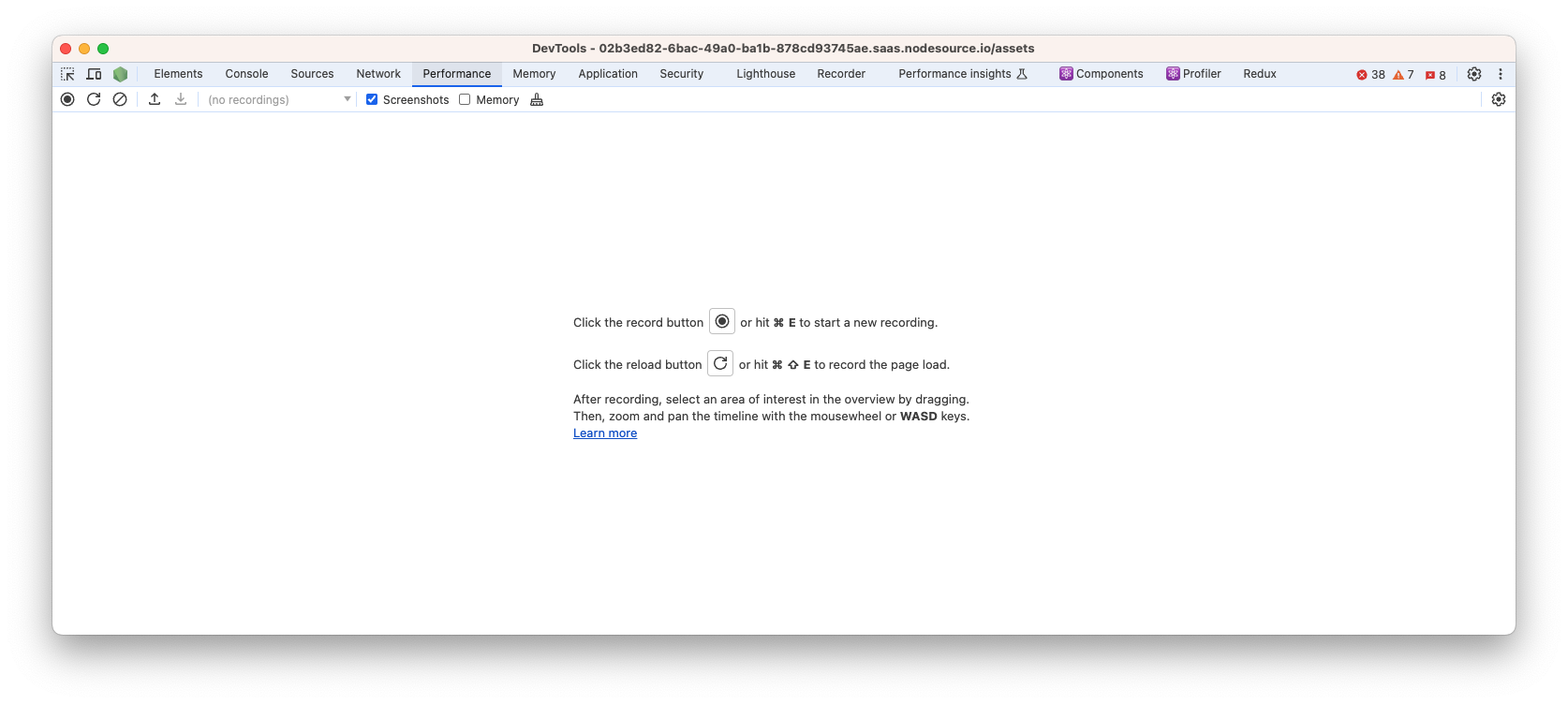
Open Chrome DevTools and select the Performance panel. Click the load icon at the top left and select the downloaded asset.
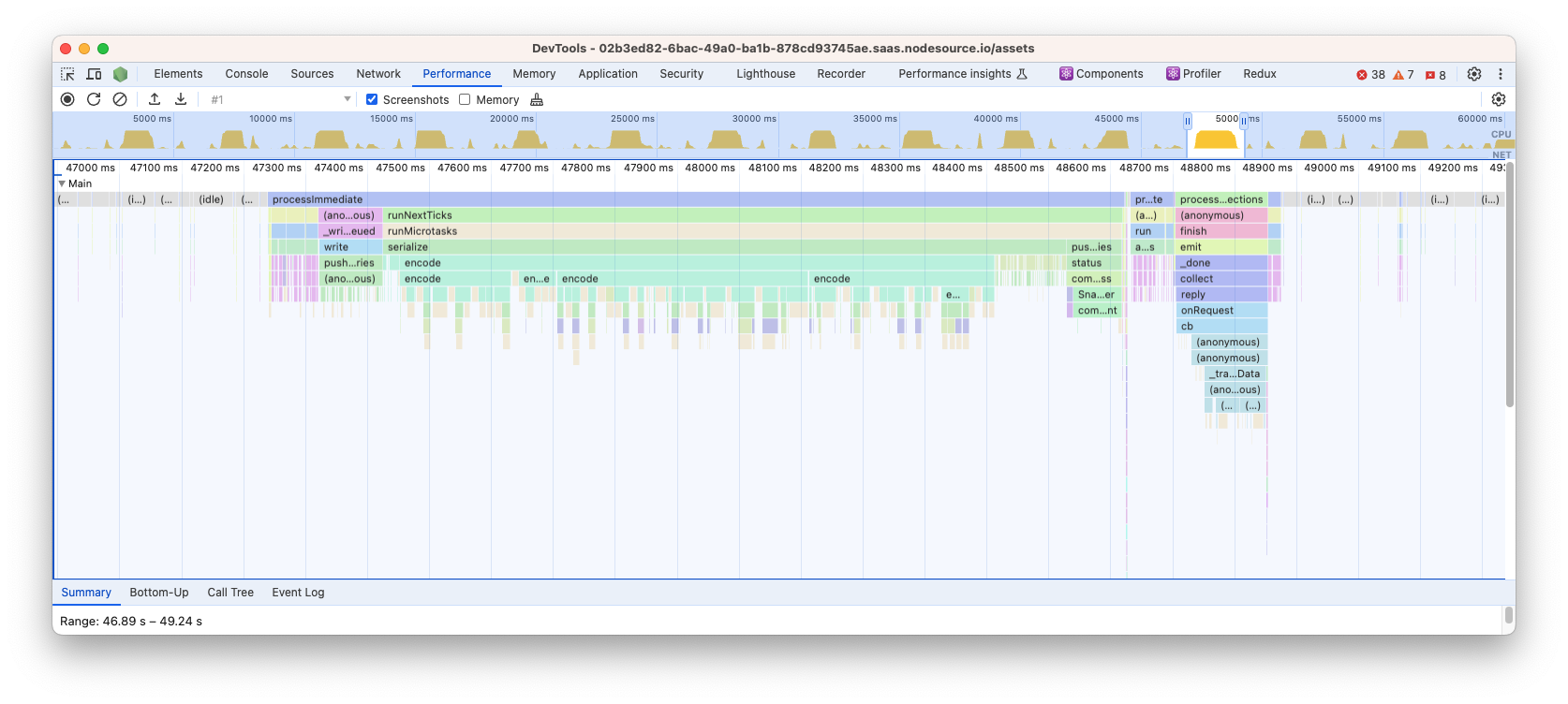
Chrome DevTools displays a flame graph of the JavaScript code that ran during profiling.